Chemical Characterization of Atmospheric Aerosols in the Sarajevo Canton: Results of 2017-2018 Sarajevo Canton Winter Field Campaign (SAFICA)
Abstract
The World Health Organization (WHO) identified air pollution as the world's largest single environmental health risk causing seven million deaths per year. Of particular concern are heavily polluted and understudied urban centres. Sarajevo, the capital of Bosnia and Herzegovina (B&H), is one of urban centres which often experiences low air quality due to the extensive use of non-renewable energy sources and geographical location. During 2010, an annual average concentration of PM10 in Sarajevo was 50 µg/m3, a value 2.5 times higher than the recommended WHO guidelines value of 20 µg/m3. Sarajevo Canton Winter Field Campaign 2017-2018 (SAFICA) took place during the cold winter season of 2017-2018 (Dec 4, 2017 – Mar 15, 2018). The project was led by the Federal Hydrometeorological Institute of B&H, Institute of Public Health of the Sarajevo Canton, University of Sarajevo and University of Rijeka. Field measurements took place at three urban locations within Sarajevo (Otoka, Pofalići, and Bjelave) and one remote location (Ivan Sedlo mountain ridge). This presentation explains the basics of anthropogenic air pollution and its global influence on air quality, with particular attention given to atmospheric particulate matter (PM) and aerosol formation mechanisms. Preliminary results of SAFICA measurements are presented and compared with those from other global urban centers.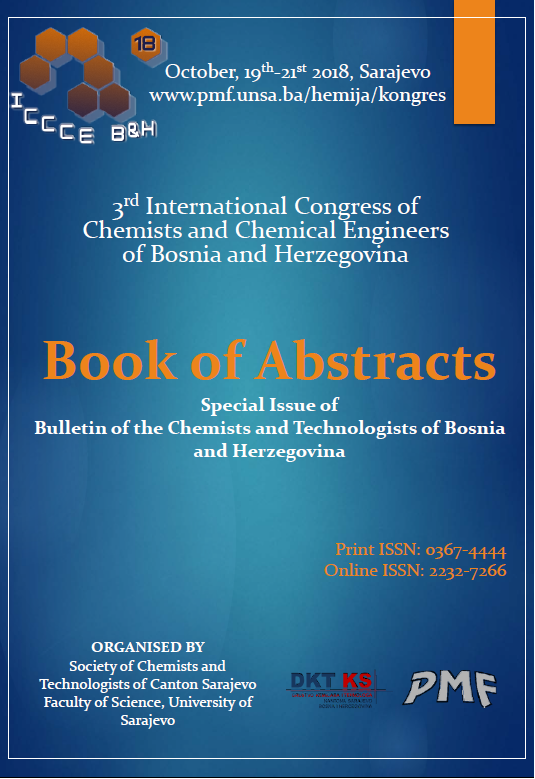
Downloads
Published
2018-10-19
Issue
Section
Plenary Lectures
How to Cite
Džepina, K. (2018) “Chemical Characterization of Atmospheric Aerosols in the Sarajevo Canton: Results of 2017-2018 Sarajevo Canton Winter Field Campaign (SAFICA)”, Bulletin of Chemists and Technologists of Bosnia and Herzegovina, (3 Special Issue), p. 4. Available at: https://glashem.pmf.unsa.ba/index.php/bctbh/article/view/396 (Accessed: 16 September 2026).