
Vol. 45 (2015): Bulletin of the Chemists and Technologists of Bosnia and Herzegovina
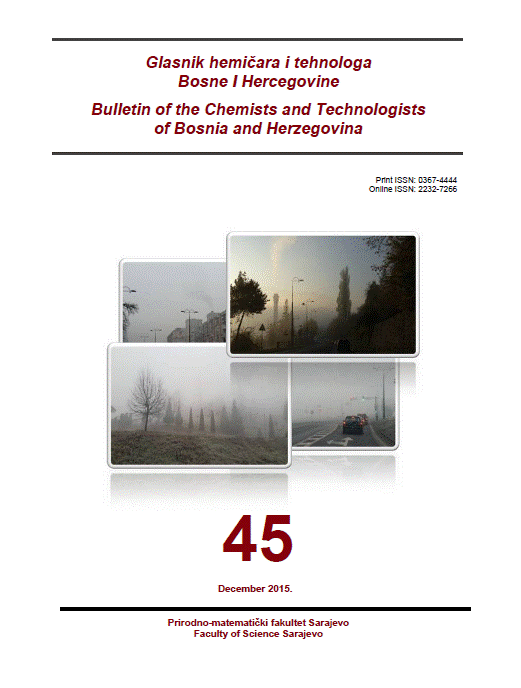
Sarajevo is not the only capital city suffering from air pollution during the winter period. The European Environment Agency reported that a significant proportion of Europe’s population lives in areas, especially cities, where exceedances of air quality standards occur: ozone, nitrogen dioxide and particulate matter (PM) pollution pose serious health risks. Heavy fog and smog are not uncommon in Sarajevo which lies in a valley surrounded by mountains. The problem becomes more serious in winter when many residents burn coal or wood for heating.
The World Health Organization estimates that over 7 million deaths annually caused by respiratory disease, cardiovascular disease and cancer can be attributed to air pollution globally. In many cities, breathing has become dangerous - particularly in cities, and this will worsen with increasing climate change.
A historic international climate agreement was signed at the COP21 (21st annual session of the Conference of the Parties) United Nations climate summit in Paris by negotiators from 195 countries. The agreement is designed to reduce greenhouse gas emissions and limit the average rise in global temperatures to 2 degrees Celsius above pre-industrial times.
Many of the steps needed to prevent climate change have positive health benefits. For example, increased use of public transport instead of personal cars in industrialized countries will reduce greenhouse gas emissions. It will also improve air quality and lead to better respiratory health and fewer premature deaths. Furthermore, the increase in physical activity from walking may lead to less obesity and fewer obesity-related illness. The sooner these steps are taken, the greater their impact will be on public health.