Vol. 63 (2024): Bulletin of the Chemists and Technologists of Bosnia and Herzegovina
Lithium in Shaping Modern Technology – Sustainability versus Controversy
Few topics in modern discourse draw as much focus as lithium. Lithium, the lightest of all metals and an alkali metal, is a silvery-white and highly reactive element renowned for its unique properties. As the strongest reducing agent, it owes its reactivity to low ionization and sublimation energies and the high hydration energy of its small Li⁺ ion. Lithium reacts readily with water, nitrogen, and oxygen, even at room temperature. These distinctive properties make metallic lithium a cornerstone of modern technology and a critical element in the ongoing energy transition, enabling the shift away from fossil fuels to greener technologies. Its primary application is in lithium-ion batteries, which power a vast array of devices, from smartphones and laptops to electric vehicles. Lithium significance extends beyond batteries to pharmaceuticals in treating bipolar disorder, glass and ceramics in improving thermal shock resistance, industrial greases in increase of high-temperature stability, hydrogen storage and synthetic chemistry.
In public discourse, metallic lithium, its compounds, and lithium ores are often confused, leading to misunderstandings about the risks involved in lithium production. A common misconception equates the mining of lithium-rich minerals with the production of metallic lithium. However, mining ores like spodumene or lepidolite is no more hazardous than mining other metal ores, such as copper or iron. The actual challenges lie in the chemically intensive processes required to extract, purify, and refine lithium ores into usable compounds or metallic lithium.
Industrially, lithium is obtained either from brines or through chemical and electrochemical processing of ores. Extraction from brines involves pumping lithium-rich saline water into evaporation ponds, followed by chemical treatment of the concentrated brine to produce lithium carbonate, which can be further processed into lithium chloride. In contrast, lithium extraction from ores is more complex and chemically intensive, requiring roasting of the ore, chemical treatment to isolate lithium, purification to obtain lithium carbonate, and conversion into lithium chloride. Metallic lithium is then produced via high-temperature electrolysis of a eutectic mixture of LiCl and KCl at 750°C. These processes require large quantities of chemicals such as sulfuric acid, hydrochloric acid, sodium carbonate, and calcium hydroxide, posing significant risks of water and soil contamination if waste is not properly managed or processes are poorly executed.
While the mining of lithium ores itself shares environmental impacts common to all mining, such as deforestation, biodiversity loss, and soil degradation, the advanced stages of processing introduce these unique challenges related to water depletion, chemical waste generation, and contamination of surrounding ecosystems.
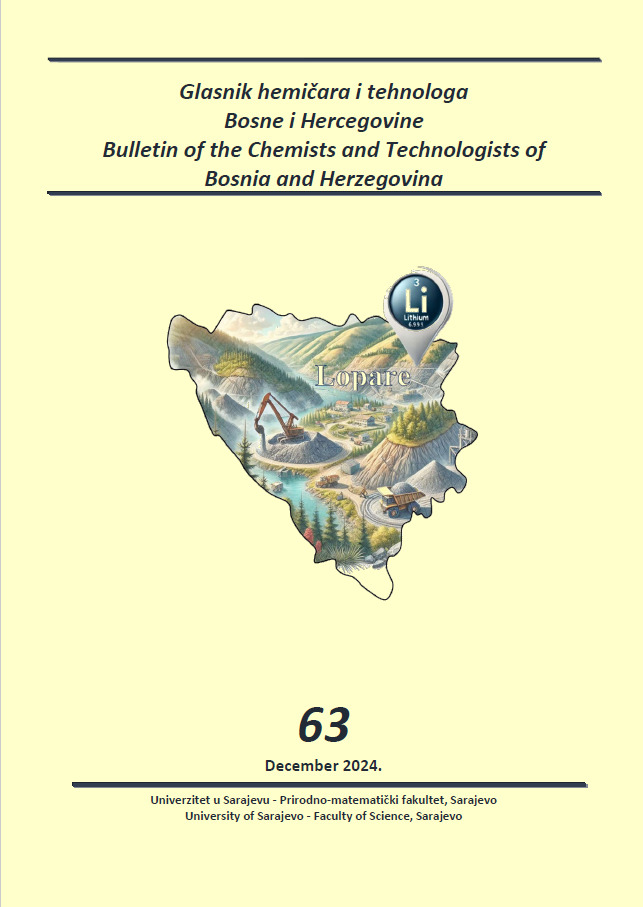
In Bosnia and Herzegovina, significant lithium reserves have been identified, particularly in Lopare and Ugljevik, with an estimated 1.5 million tons equivalent to lithium carbonate. Explorations are ongoing in areas such as Čajniče, Jezero, Šipovo, Bijeljina, Zvornik, and Brčko, encompassing a total of 20 potential sites. In Serbia, the Jadar Valley contains one of the world's largest lithium deposits, featuring the unique mineral jadarite—a lithium and boron mineral critical for battery and glass production. The Jadar project, led by Rio Tinto, is projected to meet over 10% of global lithium demand. However, the project faces substantial opposition due to concerns about potential soil and water contamination, with environmental activists and local residents rightly worried about its long-term impact on the environment.
Neither Bosnia and Herzegovina nor Serbia currently have the capacity to process lithium ores into high-value final products. Existing infrastructure supports only mining and the extraction of lithium-rich compounds like lithium carbonate or lithium chloride, which are exported to developed countries for further refinement and battery production—processes that carry significant economic value. This dependence limits the financial benefits for domestic economies and shifts most of the economic value abroad. It also raises questions about whether the potential economic gains justify the environmental and social costs of mining, as extraction and chemical processing can impose significant burdens on local ecosystems and communities.