
Vol. 64 (2025): Bulletin of the Chemists and Technologists of Bosnia and Herzegovina
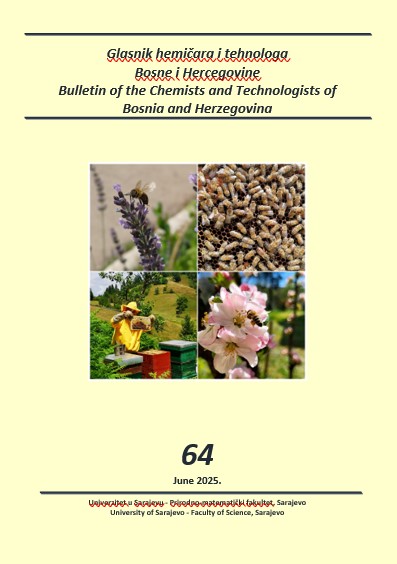
Dead Bees - A Warning That We Must Not Ignore
According to data from the American National Institute for Food and Agriculture, the death of bees has negative consequences for the entire society, considering that about 35% of the world's food depends on pollinators. Bees are certainly one of the most important pollinators. In 2025, a significant number of dead bees was recorded around the world, including in Bosnia and Herzegovina. In the United States, the percentage of dead bees was 50-70%. In Serbia, the loss of bee colonies varied from region to region, but the greatest loss was in Vojvodina and western Serbia. Losses of bee colonies from 35% to 100% have been recorded in Serbia. In Bosnia and Herzegovina, that percentage is between 30% and 50%, although there are also losses in the percentage of 90%.
The death of about 10% of bees after the winter period is something that usually happens because there comes a period when the winter bees need to raise the first generation of spring bees. If the bee colonies are weakened and do not have enough strength to carry out that shift, the death of the old bees occurs before they pass the role to the new generations, but this certainly does not happen in such a large percentage as it did in 2025. Therefore, the question arises as to what is the reason for such a large and massive death of bees. Taking into account the fact that the beekeepers state that there are no dead bees in front of the hives or even inside the hives, but the hives are empty and inside the hives there are few reserves of honey and pollen and very little honey. What is certain is that the death of the bees did not occur only because of one factor, but that several of them led to this outcome. Potential causes of bee death are: varroa, viruses, pesticides, insecticides, climate change leading to large dry periods resulting in poor bee nutrition, the appearance of invasive hornet species, habitat degradation, and stress. Sublethal doses of immunosuppressive pesticides favor the spread of bee diseases, and pesticides and their interactions contribute to the loss of bee colonies caused by stress. Neurotoxic insecticide molecules affect the cognitive abilities of bees, reducing their performance and ultimately affecting the sustainability of bee colonies.
Immunosuppression of natural defenses by neonicotinoid and phenyl-pyrazole (fipronil) insecticides opens the way for parasitic infections and viral diseases, encouraging their spread among individuals and among bee colonies at higher rates than in conditions without exposure to such insecticides. Synergistic interactions between the parasitic Varroa mite and viral pathogens severely reduce host immunity and contribute to the deterioration of bee health. The long dry period that is a consequence of climate change also has a negative effect on bees because it leads to impoverished bee nutrition, and bees that do not have enough food are more susceptible to virus infections. Pollen is very important for the nutrition of bees because it is rich in proteins, amino acids, vitamins, and minerals that are necessary for the proper growth and development of bees, and in case of its deficiency, bees' immunity weakens and bees can die.
Although many factors are contributing to the global decline of honeybee populations, the most dangerous stressor is the Varroa mite. The Varroa mite is a parasite that attacks adult honeybees and their brood and feeds on hemolymph, which weakens their immune system. Varroa reproduces quickly and can overwhelm a honey bee colony in about six months. The presence of varroa in the hive leads to:
- reduction of the total population of the colony, which affects the possibilities of nutrition and pollination,
- decrease in honey production due to reduced nutrition and damaged health of worker bees,
- weakening of colonies and increasing their sensitivity to additional stressors from the environment.
The mass death of bees recorded in 2025 should be a serious alarm for the population, the environment, agriculture, and food security. Of particular concern is the fact that bee colonies are disappearing without obvious signs of death, which may indicate multiple stressors acting simultaneously, from parasites and viruses to the use of pesticides to climate change and habitat degradation. This is a complex problem that requires coordinated action to protect bees as one of the key pollinators and thus ensure the stability of the ecosystem and agricultural production. Some of the recommendations that could certainly contribute to the protection of bees are certainly limiting the use of pesticides and insecticides, controlling their use/banning them, or using biologically acceptable methods of treating plants during the flowering phase. Improving the habitat and nutrition of bees by planting honey plants would create more comfortable conditions for bees. Control and suppression of varroa and other parasites through regular monitoring and treatment of bee colonies using effective and beeharmless means. Monitoring of climate changes and timely notifications of extreme weather conditions, education and training of beekeepers, well as cooperation with the scientific sector and researchers.