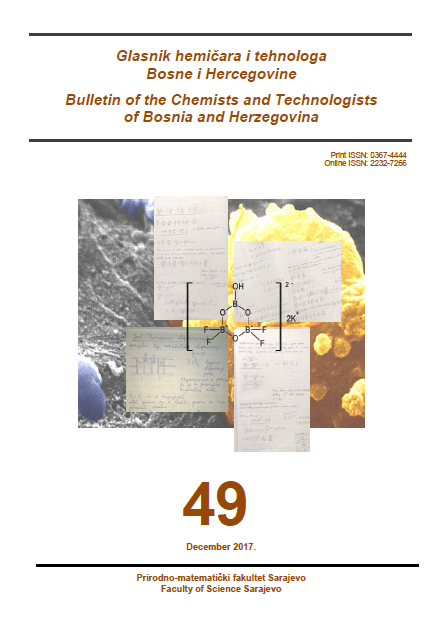
Vol. 49 (2017): Bulletin of the Chemists and Technologists of Bosnia and Herzegovina
Climate change is at the top of the list of global issues; not surprisingly, as the focal challenge to life and research which affects economy, policy, and the world at large. The cooperation and collaboration between nations is of vital importance in order to tackle these issues since it truly does change the way we look at protecting vulnerable populations.
The Kyoto Protocol (1997) is the first international treaty to cut greenhouse gas emissions, and it is linked to the United Nations Framework Conventions on Climate Change (1992). The Protocol commits parties by setting internationally binding emission reduction targets. Under the Protocol, countries must meet their targets primarily through national measures. The Protocol, since its adoption at the Third Conference of the Parties (COP3) in 1997, has become a beacon of climate action and an inspiring precursor to the Paris Climate Change Agreement (2015), because it demonstrated that international climate change agreements not only work but can significantly exceed expectations in meeting their objectives.
Similarly, the UN Climate Conference (2017) in Bonn, Germany, gathered leaders of national governments, cities, states, business, investors, NGOs and civil society in order to stimulate climate action once again and to meet the goals of the Paris Climate Change Agreement.
The undertaken actions urge all nations to commit to a common cause – to confront climate change and to adapt to its effects with joint efforts and mutual understanding.
Celebrate the Kyoto Protocol's 20th Anniversary with the UN. (2017, Decembar 06)