
Vol. 55 (2020): Bulletin of the Chemists and Technologists of Bosnia and Herzegovina
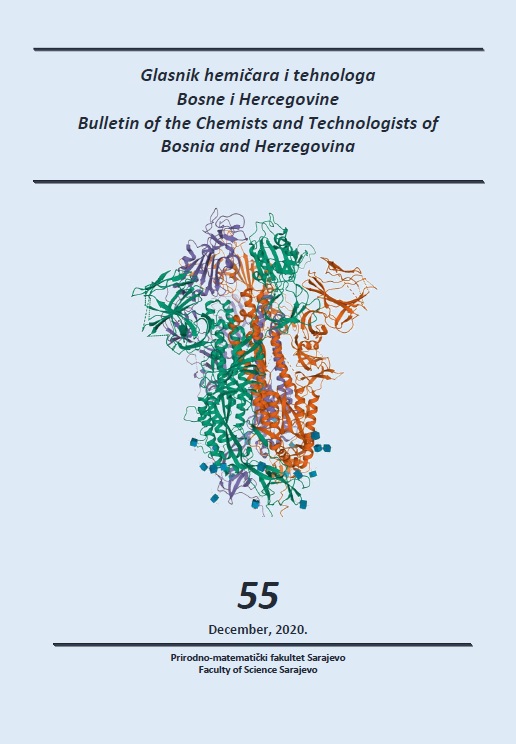
Severe acute respiratory syndrome coronavirus (SARS-CoV)-2 is the cause of pandemic that disrupted the world like never before. Though primarily a medical issue, the spectrum of damaged caused by the disease on other aspects of life are numerous. Social connections, economy and general disruption of systems even in the most developed of nations are just some examples of the danger of this pandemic. Ranging in effect from asymptomatic individuals to cases much more severe in nature such as death, the spread of COVID-19 over the world was declared a pandemic by WHO on March 11, 2020. Since then, a numerous research papers, peer reviewed or not has been published in a number of research journals. At his time, thirty nine published papers about novel coronavirus have been retracted including ones published in the most respected journals. As of December, searches for COVID-19 returned 85,02 results in PubMed. At the same time, race to find a relevant treatment to stop pandemic was on the way. In November, BioNtech and Pfizer announced the efficacy of their COVID-19 vaccine based on mRNA technology.
According to US Food and Drug Administration Pfizer’s vaccine is composed of active ingredients, salts and sucrose. Active Ingredients are nucleoside-modified messenger RNA -1273 (mRNA) encoding the viral spike glycoprotein (S) of SARS-CoV-2. Spike glycoprotein is the one that latch to the cells and gains entry allowing the virus to function inside the cell. Vaccine contains modified mRNA sequence that codes only for spike glycoprotein. It is packed in complex positively-charged lipids, in order to make it more stable and resistant to RNasecatalyzed degradation. When applied, lipid particles packed with modified mRNA are endocytosed, and its content release in the cytosol, where the mRNA is translated into antigenic proteins causing immune system to produce neutralizing antibodies. Lipids nanoparticles are added to encase the mRNA.
The first lipid structure is (4-hydroxybutyl)azanediyl)bis(hexane-6,1-diyl)bis(2-hexyldecanoate), (Patent number ALC-3015), then 2-[(polyethylene glycol)-2000]-N,Nditetradecylacetamide (patent number ALC-0159), 1,2-distearoyl-snglycero-3-phosphocholine (DPSC) and cholesterol.
Salts such as potassium chloride, monobasic potassium phosphate, sodium chloride, basic sodium phosphate dehydrate are added for pH control. The one of the draw back of the vaccine is a need to be kept at low temperature (-73 °C) and use within several days after thawed. These vaccines that are so widely needed now more than ever, are a great success in regards to molecular medicine and biotechnology. It is also important to note what an achievement this is for nanomedicine given the absence of recognition for this field. Due to the characteristics and nature of delivering genetic material, nanomedicine is of great importance with all its principles. These biocompatible engineered materials are necessary for the protection of drug cargos and offer biodistribution and intracellular localization. Targeting cancer cells with nanotechnologydesigned drugs and precise delivery has been in works for a while. This line of events might help with development of nanomedicine and a new strategies for the treatment of a different diseases.